
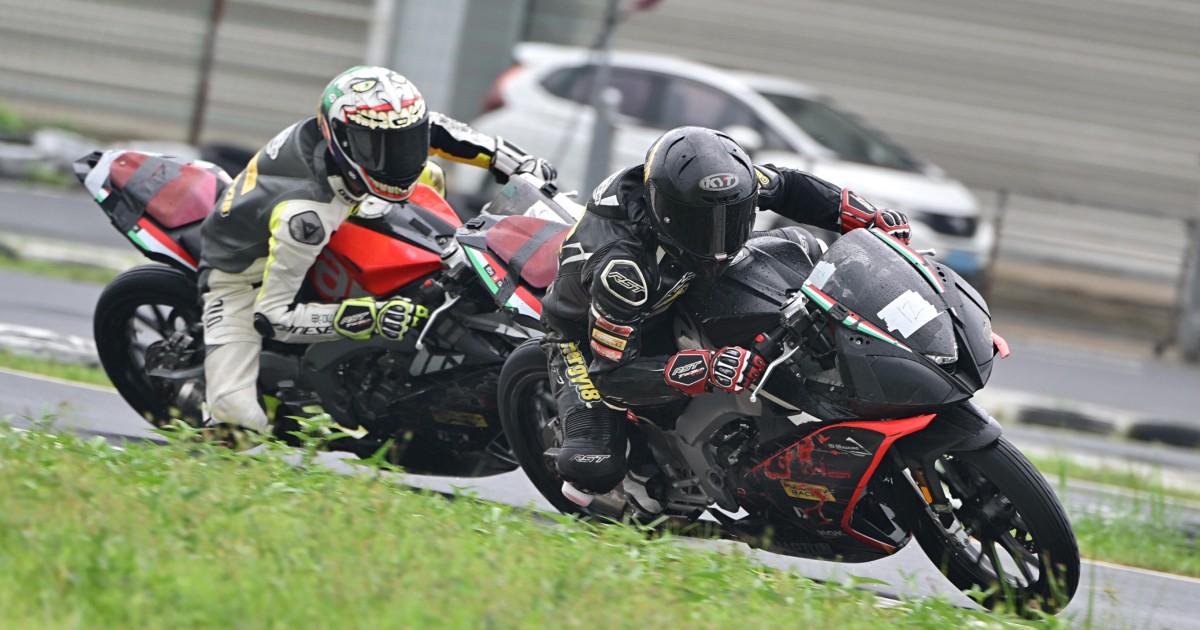
On June 28, 2026, Round 2 of the Asian Riders Friendship Race took place at Zhongshan Zhongsa International Circuit. A total of 15 riders competed on identical Aprilia GPR150 motorcycles. Intermittent rain throughout the day meant that practice, qualifying, and both races were held in wet conditions, creating a series of exciting and fiercely contested battles.
Having experienced a particularly disappointing wet-weather race one year ago, Hoi showed a completely different level of confidence and composure this time around.
In Race 1, he fought consistently among the leading group but suffered a crash following an unexpected incident towards the end of the race. However, he quickly rejoined the track and still managed to cross the finish line in third place, demonstrating an impressive never-give-up attitude.
This time, we spoke with Hoi about how he has changed over the past year and what was going through his mind during the races.
Rider Profile
Name: Hoi
Team:Energymoto 18
Race1:3rd
Race2:3rd
Mental Preparation and Breaking Through Before the Wet Race
── What kind of race strategy did you prepare before this event?
The weather forecast four days before the race already indicated that we would most likely have wet conditions on race day, so I had mentally prepared myself for a wet race.
Even though I was prepared, the memories of my crash during the 2025 Hong Kong-Macau-Zhongsa Cup were still somewhere in the back of my mind.
However, after a year of working on myself, I had gradually rebuilt my confidence. I saw this rare opportunity to compete in a wet race as a chance to challenge myself and break through those limitations.
"Relax and break through" was the main focus of this race.
Hoi is usually all smiles and loves bringing happiness to the friends around him. However, he had quietly carried the memory of his crash in the 2025 wet race with him.
This time, rather than avoiding his fear of wet conditions, he chose to face the challenge head-on, hoping to use this rare wet-weather race as an opportunity to overcome his own limitations.
T7: The Key Overtaking Point
── In both Race 1 and Race 2, we saw you repeatedly attempting overtakes at T7. Why did you choose T7 as your main overtaking point?
I have confidence in my braking and front tire. Also, the racing line I choose through T6 gives me an advantage on the straight, making T7 a good place to attack.
According to Hoi, T7 is where he can make the most of his braking advantage. He repeatedly launched attacks at this corner in both races, making it one of the highlights of the weekend.
── Liam was running ahead of you for much of the race. What did you think of his performance? Was there a particular section where you felt you had an opportunity to overtake?
Liam had an excellent start. His lighter weight gave him an advantage on corner exits and along the straights. However, I had more confidence in my braking, which allowed me to overtake him at T7 in Race 1.
Hoi made the most of his strengths to complete the overtake. Meanwhile, in his own post-race interview, Liam mentioned that this race had made him rethink the importance of defensive lines. It is clear that both riders took valuable lessons away from their on-track battle.
── Which corner or section did you find the most challenging during this event, and why?
Actually, the entire Zhongshan circuit is quite challenging. But for this race, I would say the T5-T6-T7 combination was the most demanding.
The racing line you choose through T5 affects your exit speed at T6.
At T6, you have to transition from left to right, so you need to be extremely careful with how you control the bike. My bad memories from 2025 actually came from this corner.
Then, at T7, you want to carry as much speed as possible into the corner, so you need to manage your braking carefully to avoid a lowside.
Judgement and Riding Rhythm in Wet Conditions
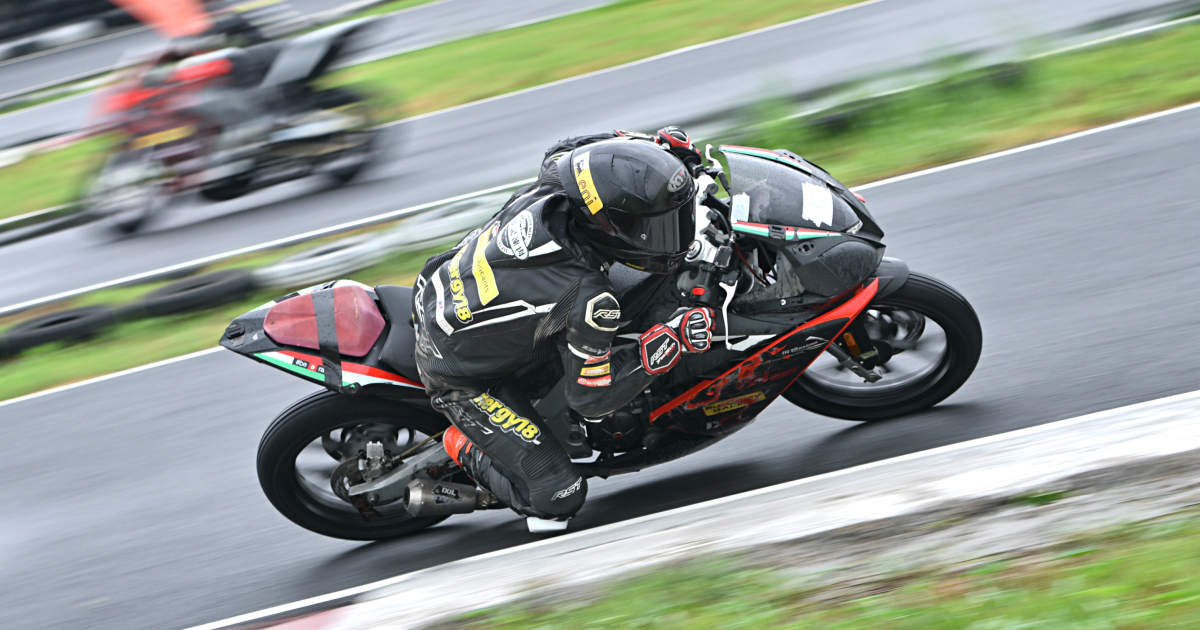
── How was this wet race different from your usual races in dry conditions? How did it affect your riding style?
Wet-weather riding requires much finer control compared with riding in the dry. You still need to carry speed, but you cannot be aggressive or rough with the controls. Your body also needs to be more relaxed than it would be in dry conditions.
── When chasing the riders ahead, what goes through your mind? Do you focus mainly on finding overtaking opportunities, or do you have another strategy?
A 16-lap race at Zhongshan Zhongsa is not easy for most riders. However, physical energy consumption tends to be lower in wet conditions, so I didn't plan to turn it into a battle of endurance.
Instead, I chose to follow the riders ahead, observe their movements, and look for opportunities to overtake.
Hoi believes that simply riding conservatively is not enough to be fast in wet conditions. By keeping his body relaxed and allowing the motorcycle to work naturally, he can actually make better use of its performance.
This approach also reflects the experience and understanding he has developed through years of racing.
── Did your riding style or mindset change between Race 1 and Race 2?
In Race 1, I was more fired up and rode with a lot of excitement. The track was slightly drier than it was in Race 2, so I could ride more freely.
Before Race 2, however, it rained again for a while. That increased the psychological pressure, and I was worried that riding in the same way as I had in Race 1 might be dangerous. So I took a more conservative approach.
The Growth That Comes from a Race
── What was the most memorable moment for you during this event?
It was when I collided with Pui and crashed with two laps remaining in Race 1.
I managed to get back onto the track, but my seat had come off. I continued racing while sitting on the rear subframe of the bike, and eventually finished in third place.
It really made me realize that anything can happen in racing, so that moment left a strong impression on me.
As it turned out, Hoi's seat had already come off after the crash, but he refused to give up. He continued riding while sitting on the rear subframe and eventually secured third place. His determination to finish the race made this an especially memorable moment.
── After this race, what would you like to continue improving for the next round?
This race has given me more confidence in wet conditions, but I don't want to become satisfied with that alone. I still need to improve both my riding skills and physical endurance. I'll keep training hard and working towards those goals.
Finally, a Message to His Supporters
Back in the day, talking about motorcycle racing in Hong Kong was like talking about an impossible dream.
But nowadays, there are more and more platforms where people can discover and get involved in racing.
I hope more people will come and enjoy racing together, and have fun together.
I'm Hoi, a middle-aged guy who loves motorcycle racing.
Thank you!
Editor's Note
he words that left the strongest impression on us during this interview were Hoi's own words: "Relax and break through."
Despite carrying the memories of last year's wet-weather crash, he chose not to step back. Instead, he deliberately used this wet race as another opportunity to challenge himself.
As a result, he not only rebuilt his confidence in wet conditions but also set his sights on improving his riding skills and physical endurance.
Perhaps the biggest achievement of this race was not simply overcoming his fear of wet-weather riding. It was finding a new direction for his continued development while pushing beyond his own limitations.
At the next round, we look forward to seeing an even more mature and confident Hoi on track.